
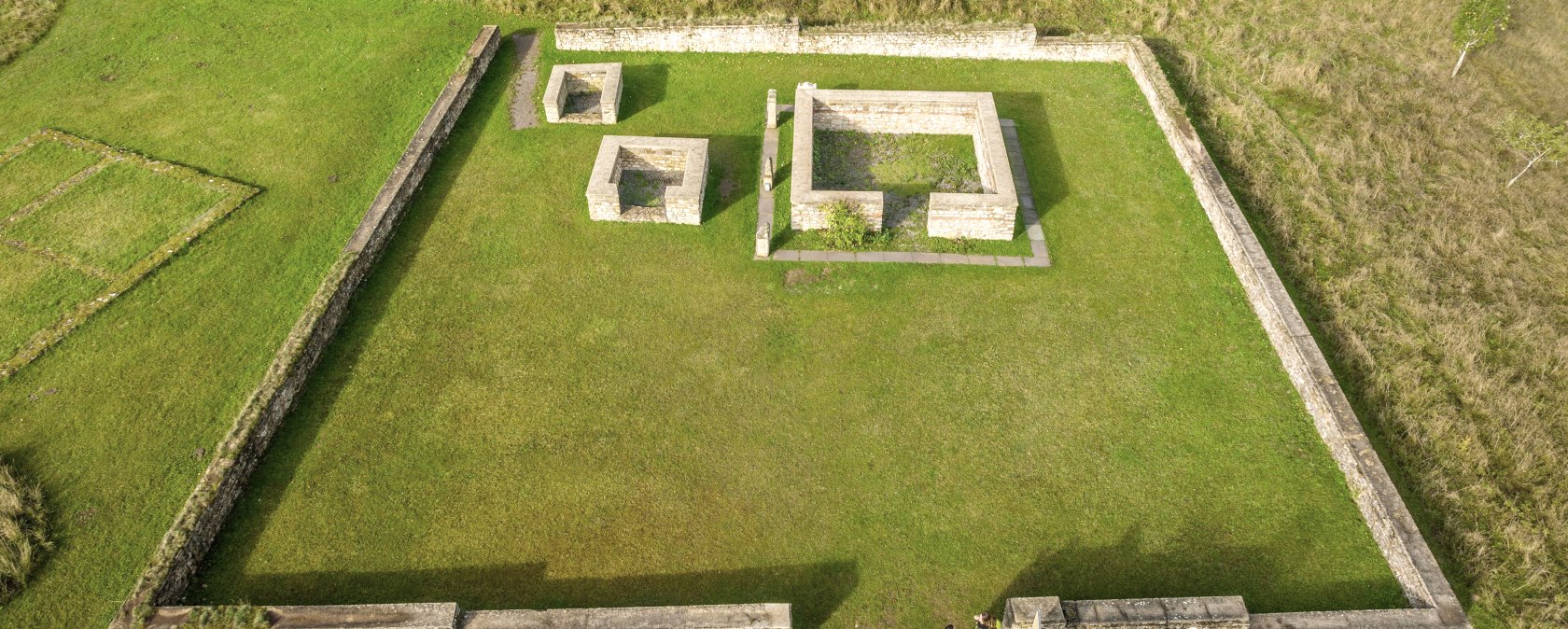
Roman matron sanctuary Görresburg, © Eifel Tourismus GmbH, Dominik Ketz

Römisches Matronenheiligtum Görresburg

Nettersheim

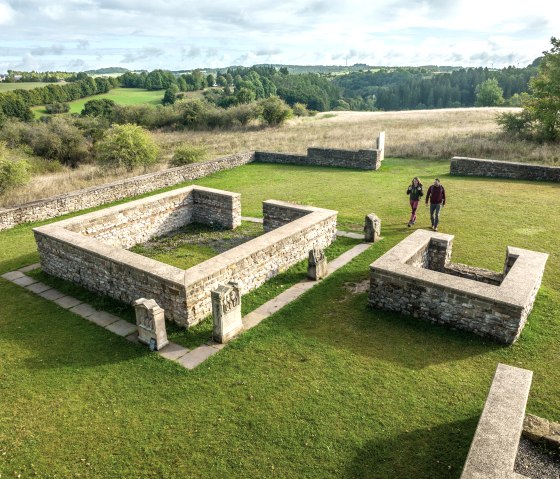
A Roman settlement existed on the Agrippa Road from Trier to Cologne (one of the most important Roman north-south routes north of the Alps) from the 2nd to the 4th century. The partially reconstructed Gallo-Roman temple district "Görresburg" formed the northern end of this settlement. The site is located on a plateau between Nettersheim and Marmagen and offers a beautiful view over the Eifel landscape. The temple precinct consists of three almost square buildings surrounded by a low wall.

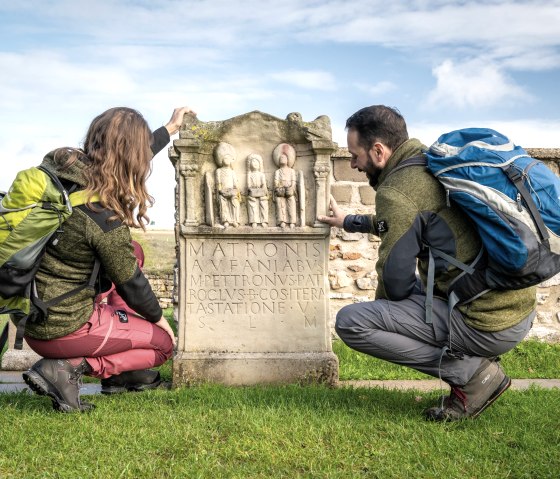
Local protective and mother goddesses, the so-called Aufanian matrons, were worshipped in this sanctuary from the 1st century until around 400 AD. The deities can be seen on the copies of the consecration stones that are placed around the larger main temple. Even today, offerings such as fruit or crops can be found in front of the consecration stones.

The "Görresburg" matron shrine is a worthwhile detour on the Eifelsteig long-distance hiking trail (stage 6).
mehr lesen

Share content:

At a glance

Opening hours

The Matron sanctuary Görresburg is freely accessible

Place

Nettersheim

Contact

Römisches Matronenheiligtum Görresburg
Matronenheiligtum "Görresburg"
53947 Nettersheim
Phone: 0049 2441-994570

Homepagewrite e-mail

Bitte akzeptieren Sie den Einsatz aller Cookies, um den Inhalt dieser Seite sehen zu können.

Alle Cookies Freigeben

Plan your journey

per Google Maps

You might also be interested in

LVR Industrial Museum / Müller Cloth Factory, Euskirchen, © Tourismus NRW e.V.

LVR-Industriemuseum / Tuchfabrik Müller

It is a journey back in time to the world of the cloth industry. In 1961, factory owner Kurt Müller closed the doors of his cloth factory in the Eifel, hoping to reopen it soon. This did not come true, but today visitors can take a unique tour of a factory where robust woollen fabrics and loden cloth were produced for many years. They are immersed in the world of dyeing and weaving and experience how some of the machines are brought back to life during a guided tour and how people used to work here.

Urft dam in the morning light, © Eifel Tourismus GmbH, Dominik Ketz

Urfttalsperre

The Urft Dam is the oldest valley dam in the Eifel and is located in the middle of the Eifel National Park. At the time, the dam was planned as the largest structure in Europe. Construction of the 266 m long wall made of quarry stones began in 1899 - in May 1905 the dam was filled with water for the first time. In addition to flood protection and energy generation, the aim of the hydraulic engineering measure was to supply the region with drinking water. With a length of 12 km, a width of up to 1 km and a maximum depth of 52 m, Lake Urft has a capacity of 45.5 million cubic metres. Translated with www.DeepL.com/Translator (free version)